March 14, 2026
Visual notes from Balloon Museum Chicago
EmotionAir at Balloon Museum stood out because it invited people to do more than just look. The strongest installations encouraged touch, movement, and play, turning the audience into an active part of the experience.
What worked best was the exhibition’s use of inflatables as a spatial medium. Scale, softness, colour, and lighting carried most of the experience, shifting how space was perceived without relying on overly complex systems or interfaces.
The strongest rooms understood that interaction was not secondary, it was central. These environments changed depending on how people moved through them, how long they stayed, and how willing they were to actually engage with the work rather than simply observe it.
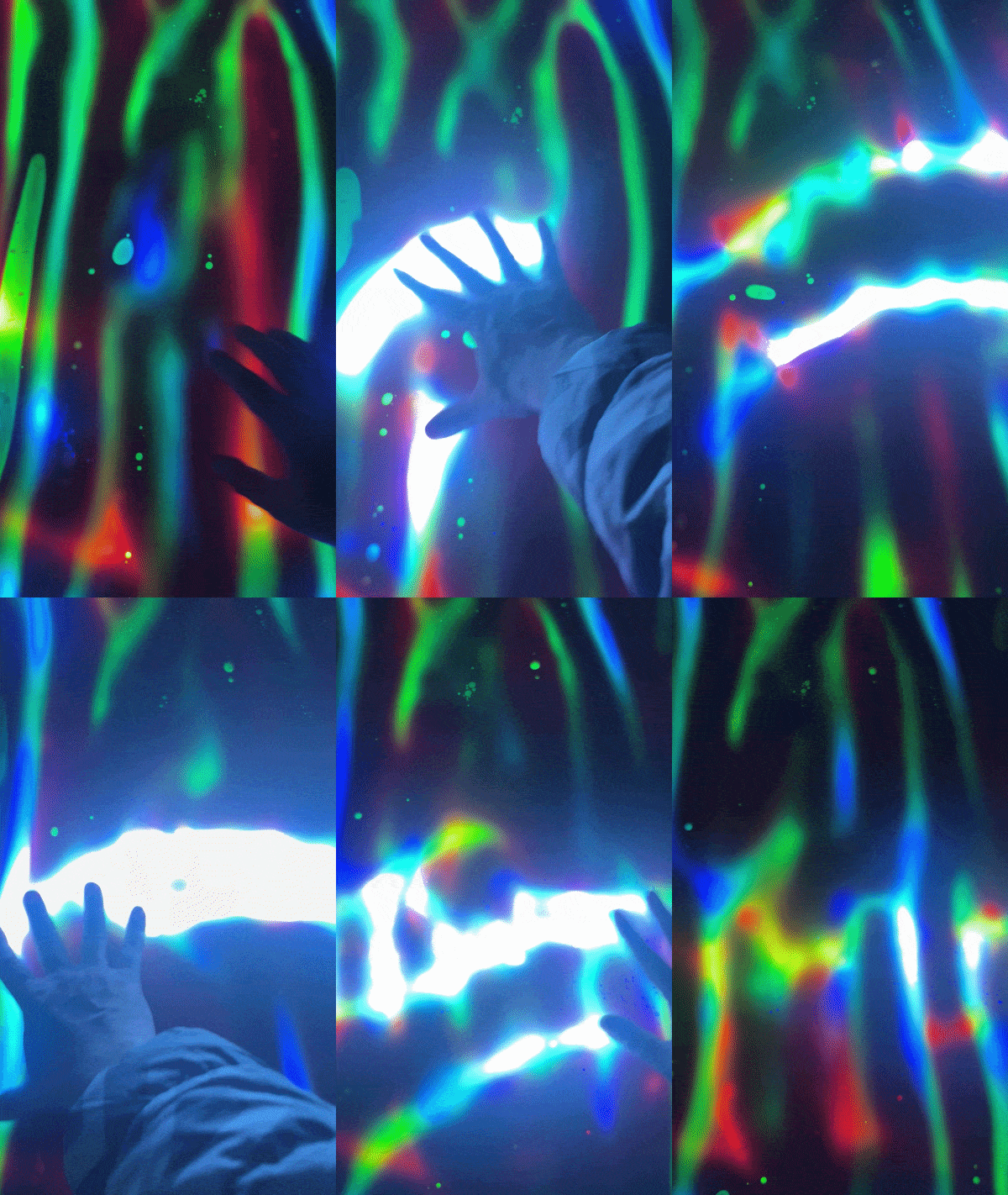
One of the most effective installations was Invisible Ballet, a room of suspended inflatable forms animated by controlled airflow, light, and sound. It felt playful, cinematic, and meditative, holding attention over multiple cycles rather than delivering a single immediate effect.
My wife and I stayed inside that piece for several rounds because it kept rewarding more time. The movement of the inflatables, the changing light, and the slow rhythm of the room made it feel less like an attraction and more like a fully constructed atmosphere.
That sense of atmosphere was where the exhibition was strongest. The best works felt like spaces to inhabit rather than objects to consume, and that made them far more memorable than the more static or photo-oriented rooms.
Not every installation landed in the same way. A few felt more like quick visual stops than fully developed environments, which only made the stronger pieces stand out more clearly through their clarity, pacing, and engagement.
Final Thoughts: What made EmotionAir work was its willingness to let play and interaction shape the experience.